RISK MANAGEMENT
Position sizing: the math you must know before every trade
Position sizing turns abstract risk management into real numbers. How it is calculated, why it changes by instrument, and the math behind every serious trade.
Position sizing: the math you must know before every trade
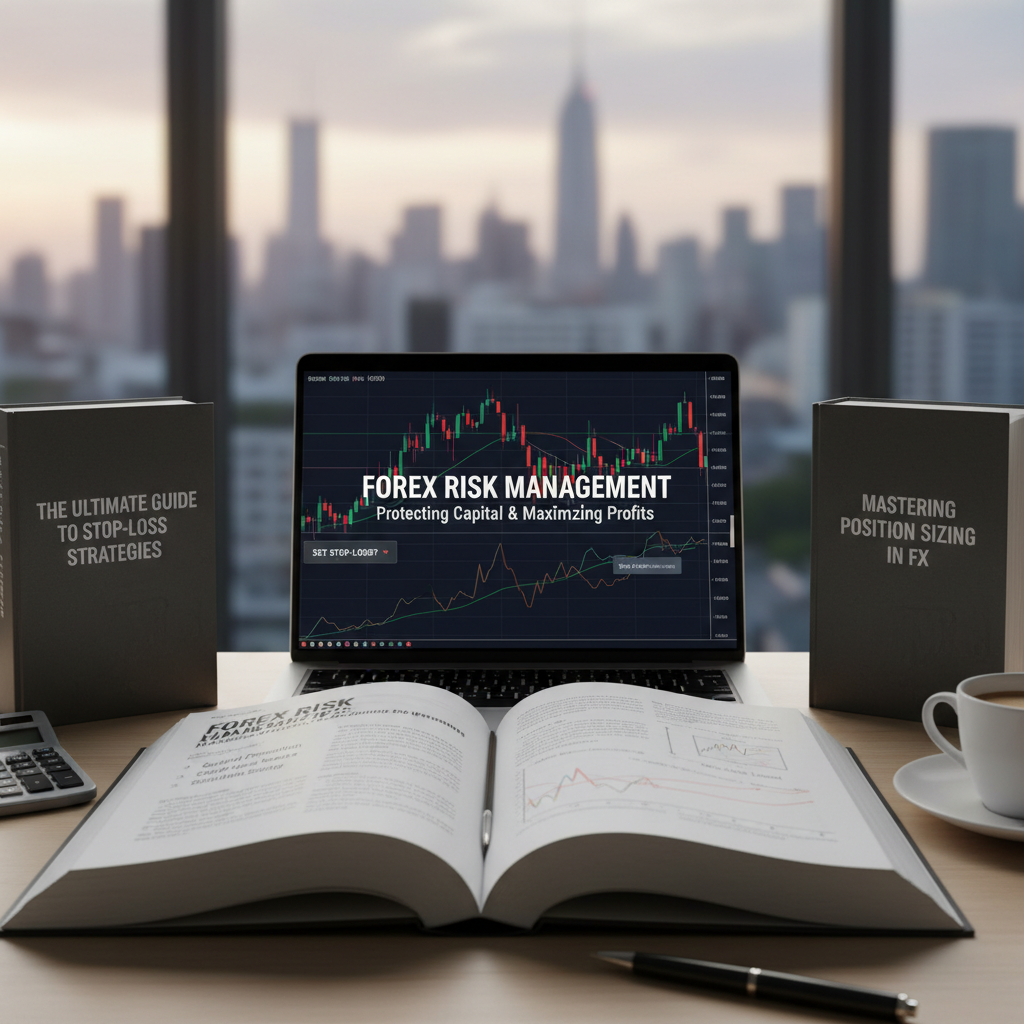
Position sizing is the most important math in trading — and the most frequently skipped. Most beginners open a position by feel: "looks good, I'll buy one lot." That is how capital is destroyed.
A serious trader knows exactly how much they lose before clicking entry. That number is not a feeling. It is the result of a formula that combines your capital, your risk per trade, and stop distance.
The formula
Position size = (Account risk in $) / (Stop distance in pips × Pip value)
Three variables:
Account risk — how many dollars you are willing to lose on this trade. Standard is 1% of capital. With $10,000 capital, account risk = $100.
Stop distance — how many pips your stop is from entry. This is determined by market structure and your setup — it is not an arbitrary number. If the valid stop is 30 pips, you do not reduce it to 15 to fit a "larger position." You reduce the position, not the stop.
Pip value — how much 1 pip of movement is worth per lot, for a given instrument. This is where most mistakes happen, because pip value depends on the instrument and base currency.
Three examples (with $10,000 capital)
Example 1: EUR/USD swing trade. Risk per trade 1% = $100. Stop distance 25 pips (below swing low). Pip value $10 per standard lot. Position size = $100 / (25 × $10) = 0.4 standard lots (or 40,000 EUR). If entry triggers the stop, loss: 25 pips × $10 × 0.4 = $100. Exactly 1%.
Example 2: XAU/USD (gold) day trade. Risk per trade 1% = $100. Stop distance 50 cents (50 × $0.01 = $0.50). Pip value $1 per micro lot. Position size = $100 / (50 × $1) = 2 micro lots (0.02 standard). Important: gold has a different "pip" definition from FX — check with your broker.
Example 3: SPX500 (index) swing trade. Risk per trade 1% = $100. Stop distance 15 index points. Pip value $10 per standard lot. Position size = $100 / (15 × $10) = 0.67 standard lots. Indices have a larger tick size than FX — fewer pips to the stop, but higher tick value.
Most common mistakes
Position size as an arbitrary number. "I'll open half a lot" without calculation = no one knows how much they are actually risking. With the same "half lot," risk changes drastically depending on the instrument.
Reducing stop distance to fit a desired position. The stop is placed by structure (below swing low, above swing high, at a key liquidity zone). If your desired size does not fit with a valid stop, you reduce the size, not the stop.
Ignoring pip value differences. Trading XAU with the same calculation as EUR/USD is a typical reason for unexpected losses.
Position size by feel. "I opened a larger position because I am confident in the setup." Confidence in the setup does not change the math of risk. A setup with 80% win probability with poor risk management still loses capital over the long term.
What the process looks like in practice
Before every trade, open the calculator (or have the formula memorized), enter: capital, risk per trade %, stop distance in pips, instrument. The calculator returns position size. Open the position at that size, set the stop at the same pips you entered, forget about it until exit.
Next steps
FX Doctor risk calculator — 20+ instruments, automatic account currency conversion, position size + pip value + maximum daily risk in one window.
NEXT STEP
Ready to start?
The Intro to trading is a free session covering the basics through concrete examples.
Book Intro →NEWSLETTER
Newsletter for traders
Concrete tips, new articles, Intro announcements — once a month, no spam.
Unsubscribe anytime with one click.
Other articles
FUNDAMENTALS
Trading or investing? The difference 90% of beginners don't understand
6 min
RISK MANAGEMENT
Risk management for beginners: how not to blow up your first account
7 min
METHODOLOGY
Order flow vs YouTube indicators: why retail traders lose
8 min
FUNDAMENTALS
Demo account or live? How to know you are ready
7 min